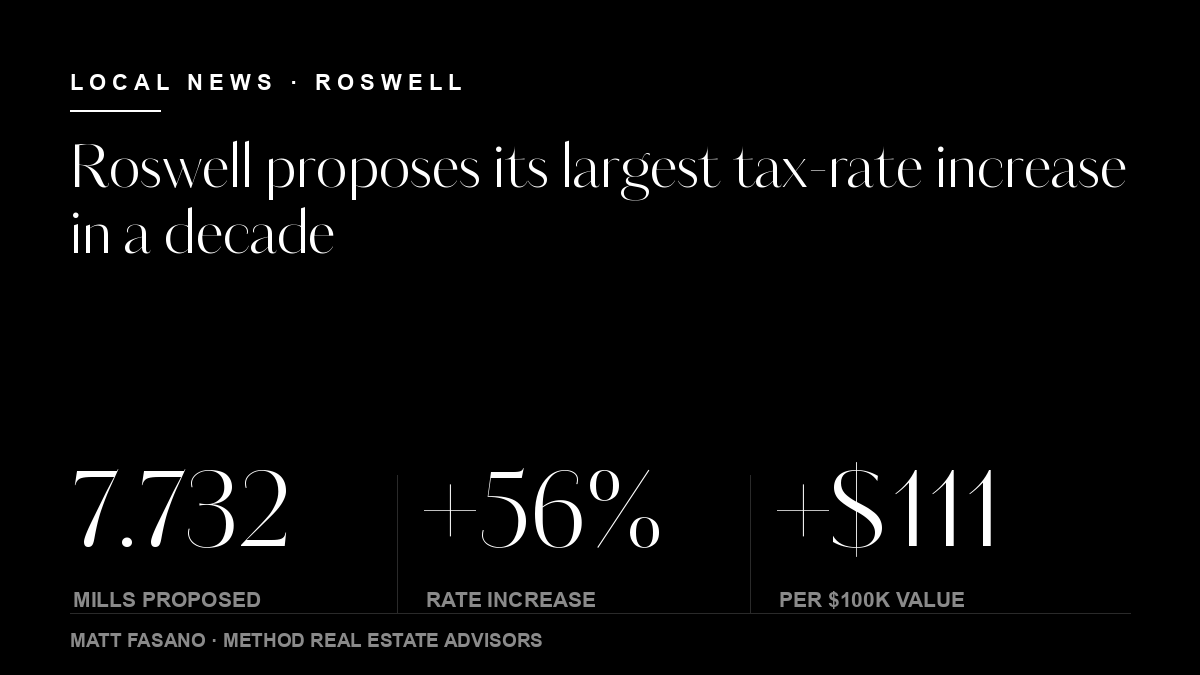
Roswell has proposed raising its city property tax rate from 4.949 mills to 7.732 mills for tax year 2026. That is a 56% increase in the rate, and the largest single-year jump in at least a decade.
The vote has not happened. Three council meetings and a town hall come first, and the last of them is September 28. If you own in Roswell, the arithmetic below is what is actually on the table — and the dates are while it can still be argued about.
The arithmetic, done out loud
Georgia assesses property at 40% of fair market value. A mill is one dollar per thousand dollars of that assessed value. So the city portion of your bill is:
market value × 0.40 × (millage ÷ 1,000)
Run at both rates, before any homestead exemption:
| Home value | City tax at 4.949 | At 7.732 | Difference |
|---|---|---|---|
| $400,000 | $792 | $1,237 | +$445 |
| $575,000 | $1,138 | $1,778 | +$640 |
| $750,000 | $1,485 | $2,320 | +$835 |
| $1,000,000 | $1,980 | $3,093 | +$1,113 |
The shortcut worth remembering: roughly $111 more per year for every $100,000 of home value. Multiply your value by that and you have your own number without waiting for a bill.
Two things that will make your actual bill different
Homestead exemptions. Roswell's exemptions apply to the general fund portion of the millage only — not the bond debt portion. If you have a Fulton County homestead exemption in place, the city one is applied automatically, and your real number will land below the table above. The table is the un-exempted arithmetic, which is the honest way to compare two rates.
This is only the city line. Your Fulton County bill also carries county and school millage, set by other bodies on their own schedules. Roswell's council controls the line in this article and nothing else on the bill.
The city puts a number on it. From Roswell's own property tax page: "Out of the total property tax that a Roswell resident pays, City taxes are equal to approximately 16 percent of their total bill." So a 56% increase applies to roughly a sixth of what you owe — not to the whole thing.
Where the money is split
The proposed 7.732 breaks into two parts: 6.549 mills for general operations — police, fire, dispatch, parks, roads, administration — and 1.183 mills dedicated to repaying voter-approved bond debt.
That second number matters when you read commentary about this. Bond debt service is the repayment of borrowing residents already approved at the ballot box. It is a different category from an operating increase, and it is worth separating the two before deciding what you think.
The city's own stated reason for the increase is "long-overdue road and infrastructure improvements, the upkeep of aging City facilities and equipment, and continued investment in public safety."
The engineer's read
A 56% rate increase reads as enormous, and the percentage is real. But two things temper what it means for a homeowner.
The first is the base. Roswell has been running a comparatively low city millage — 4.949 is a small number to take a large percentage of. The dollar move on a median-priced Roswell home is a few hundred dollars a year, not a few thousand. That is a real cost and worth arguing about; it is not the number the percentage alone suggests.
The second is that municipal millage is one of the weaker inputs to home value in North Fulton. Schools, commute, and inventory dominate. I would not expect this rate change, by itself, to move Roswell prices in a way you could isolate from everything else happening in the market.
What it does affect is carrying cost — the monthly number a buyer is underwriting. On a $575,000 home the increase works out to roughly $53 a month. That shows up in escrow, and for a buyer stretching to qualify, it is not nothing.
Four dates you can actually show up to
Because the proposed rate exceeds the state's rollback baseline, Georgia's Property Taxpayer's Bill of Rights requires the city to hold public hearings before adopting it. Those are scheduled:
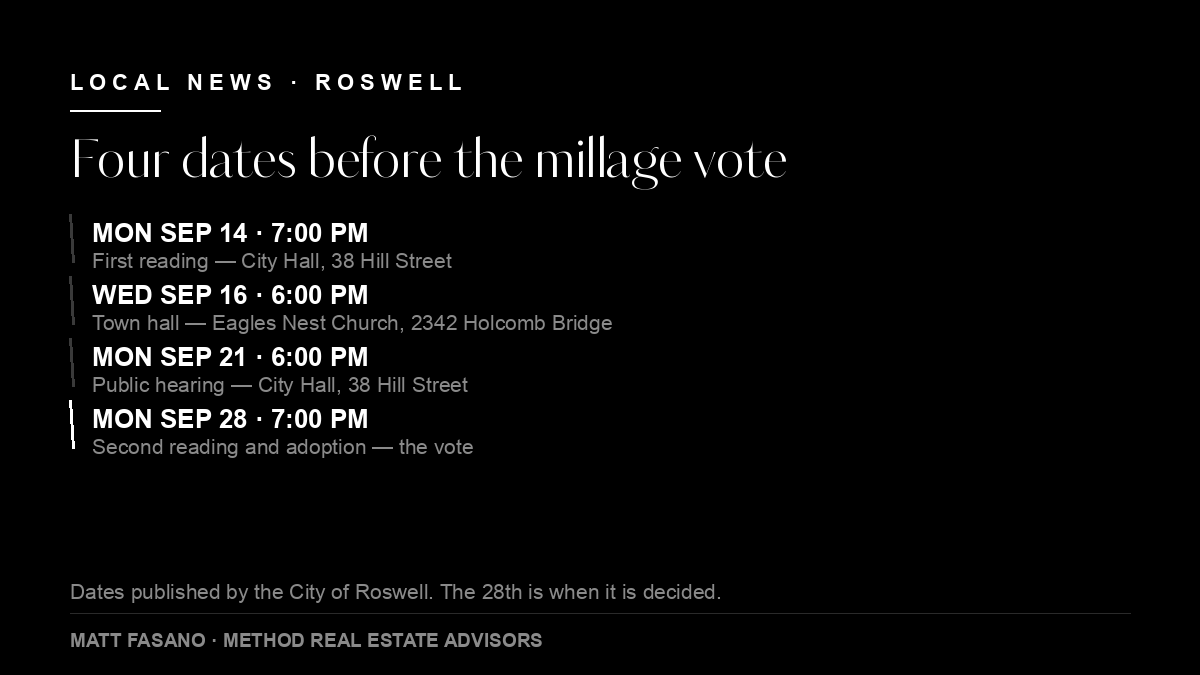
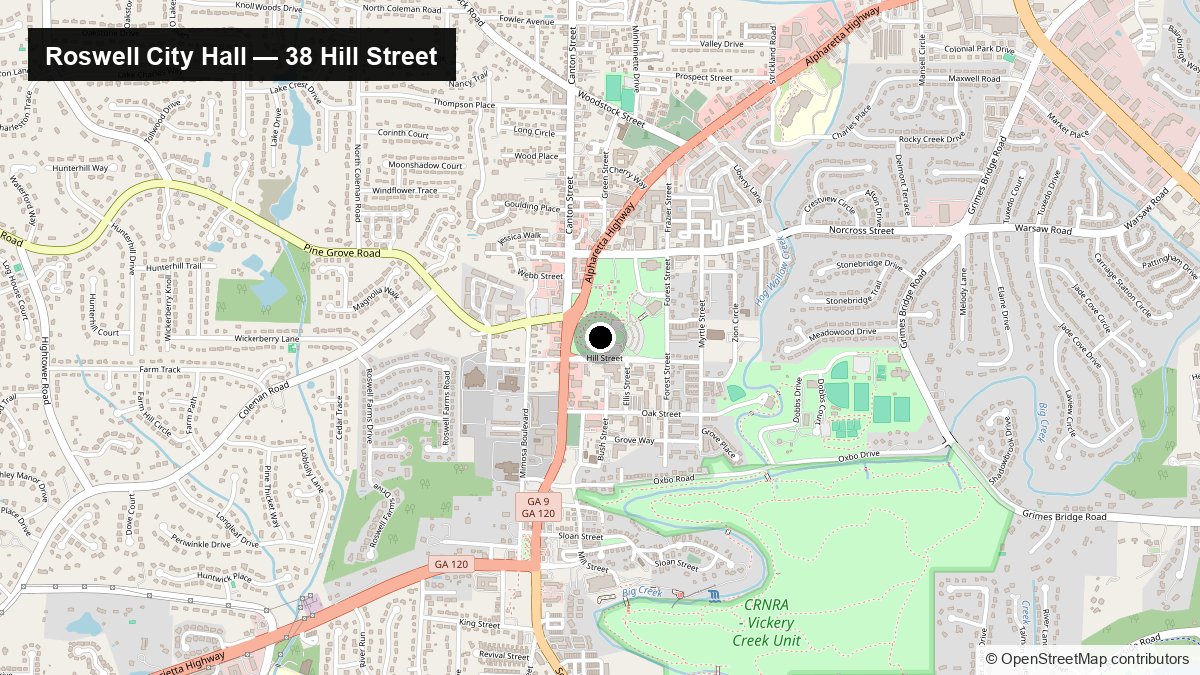
- Monday, September 14 — 7:00 p.m. First reading. City Hall, 38 Hill Street.
- Wednesday, September 16 — 6:00 to 7:30 p.m. Town hall. Eagles Nest Church, 2342 Holcomb Bridge Road.
- Monday, September 21 — 6:00 p.m. Public hearing. City Hall, 38 Hill Street.
- Monday, September 28 — 7:00 p.m. Second reading and adoption. City Hall, 38 Hill Street.
The September 28 meeting is the one where it is decided. The three before it are where it can still be changed.
Updates I'm keeping an Eye out for
- The rollback rate this is measured against. The city's page doesn't publish the figure, and it's the number that determines whether the hearings were legally required in the first place.
- Whether council is actually unified behind 7.732. A lower compromise rate is the most likely outcome if enough people show up — watch the first reading for the split.
- How much of the 6.549 operating portion is new spending versus absorbing cost the city is already carrying. Those are very different arguments.
- The current homestead exemption amounts. They decide what any individual actually pays, and they're what makes your bill differ from the table above.
I'll be at the hearings. When these get answered, this updates.
FAQ
Is Roswell raising property taxes in 2026?
It's proposed, not adopted. The city has proposed raising its millage rate from 4.949 to 7.732. Final adoption is scheduled for September 28, 2026.
How much more will I pay?
Roughly $111 per year for every $100,000 of home value, before homestead exemptions. About $640 a year on a $575,000 home.
Does a 56% rate increase mean my tax bill goes up 56%?
No. This is the city portion only. Your Fulton County bill also includes county and school millage, which are set separately and aren't part of this vote.
When can I speak about it?
September 14 (7:00 p.m.), September 16 town hall (6:00 p.m.), and September 21 (6:00 p.m.). Adoption is September 28.
Why is a tax rate increase allowed to be called a "tax increase" when values change too?
Georgia requires that any rate above the computed rollback rate be advertised as a tax increase and put through three public hearings. That's the trigger for the meetings above.
I follow the votes, filings, and rate changes across Roswell, Alpharetta, Milton and Woodstock before most people hear about them. Comment INTEL and I'll send you what's moving near you.